
Mole Checks & Skin Cancer Screening: The ABCDE Rule Every Doctor Wants You to Know
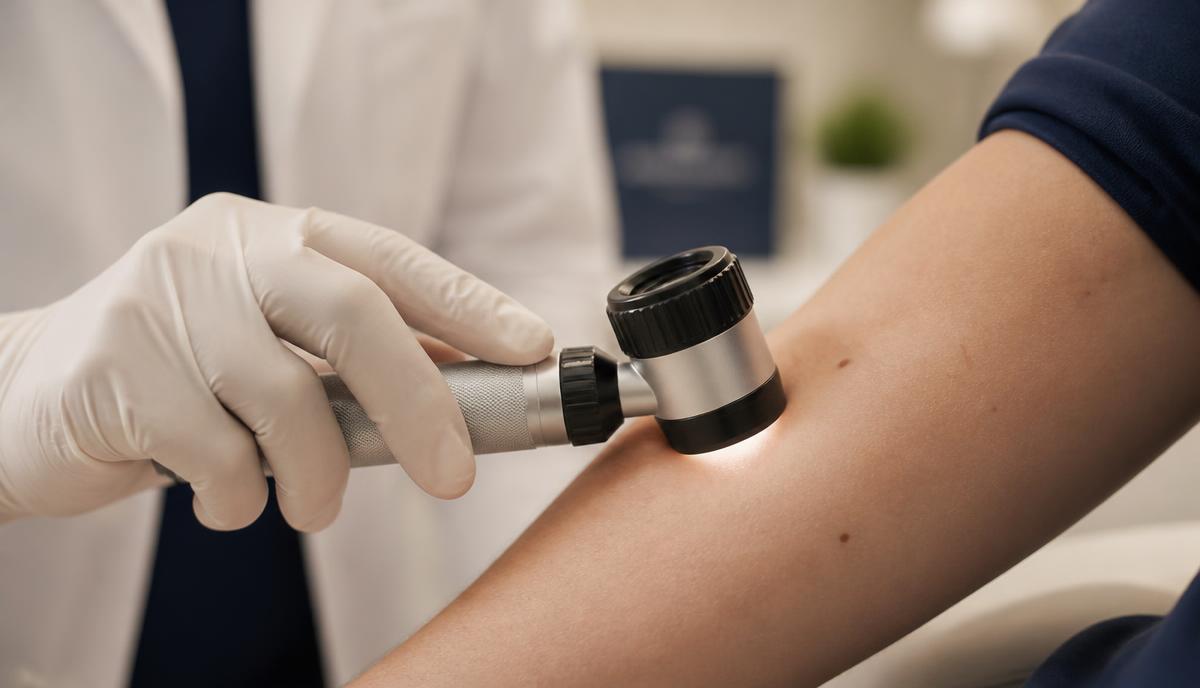
Most of us have moles we've never really looked at properly. After a summer of sun exposure, late August and September is exactly when doctors see a rise in people finally getting a spot or mole checked — and it's one of the most worthwhile five-minute conversations you can have with a GP.
The ABCDE Rule
This is the checklist doctors actually use to assess a mole. If a mole ticks more than one of these boxes, it's worth getting seen.
- A — Asymmetry: one half of the mole looks noticeably different from the other
- B — Border: edges that are irregular, blurred, or poorly defined, rather than smooth
- C — Colour: uneven shading, or more than one colour within the same mole
- D — Diameter: larger than about 6mm — roughly the size of a pencil eraser — though melanomas can be smaller
- E — Evolving: any change in size, shape, colour, or texture over weeks or months
A useful extra to know: the “ugly duckling sign” — a mole that simply looks different from all your others is worth flagging, even if it doesn't clearly tick any of the ABCDE boxes on its own.
Who's at Higher Risk
- Fair skin, red or blonde hair, or skin that burns rather than tans
- A high number of moles (more than 50) or several atypical-looking moles
- A personal or family history of melanoma or other skin cancer
- A history of sunburn, particularly blistering sunburn, or regular sunbed use
- A weakened immune system, including after an organ transplant
Melanoma is among the five most common cancers in the UK — but it's also one of the most treatable when caught early, with survival rates above 95% at stage 1.
Why Timing Matters
This is the part that surprises most people: on the NHS, routine (non-urgent) dermatology waits currently run anywhere from 12 to 40 weeks depending on the area. If a GP does flag a mole as suspicious, it's fast-tracked onto the two-week-wait cancer pathway — but for anything that falls into the “let's keep an eye on it” category, months can pass before it's properly assessed.
That gap is exactly why a private mole check is worth considering if you have something you've been meaning to get looked at: same-week assessment with a doctor, using a dermatoscope to examine the mole properly, rather than waiting to see if it changes.
What Actually Happens at a Mole Check
A proper mole check isn't a quick glance. It typically involves:
- A full discussion of your history — sun exposure, family history, any moles that concern you
- Dermatoscopic examination — a handheld magnifying tool with a light that lets a doctor see structures within the mole invisible to the naked eye
- A clear outcome: reassurance, a plan to monitor, or a referral for further assessment if needed
When to Stop Waiting and Get Checked
If you've been putting off checking a mole because it's “probably nothing,” that instinct is exactly backwards — melanoma has no symptoms in its early stages beyond the mole itself changing. If you can't remember what a mole used to look like, that's itself a reason to have it properly assessed rather than guess.
Want A Doctor's View?
Book a private mole check or skin assessment at our Esher or Epsom clinic — same- and next-day appointments available, with dermatoscopic examination as standard.
Book now